Israel is currently navigating a profound political crisis that transcends mere parliamentary deadlock, signaling a fundamental struggle over the country's national identity and democratic framework. The impasse involves competing visions for governance, judicial independence, and social responsibility. This analysis examines the systemic tensions threatening Israel's stability and its long-term strategic interests.
The tension between political survival and national interest
The current landscape of Israeli politics is increasingly defined by the friction between individual political longevity and the strategic requirements of the state. As Benjamin Netanyahu maintains his grip on leadership, questions have emerged regarding whether coalition preservation has superseded the pursuit of long-term national stability.
This dynamic creates a significant challenge for decision-making processes. When the maintenance of a parliamentary majority becomes the primary driver of policy, strategic national interests—ranging from economic reforms to regional security architecture—may be compromised. The consequence of this prolonged instability is a growing perception of a governance model that prioritizes immediate political survival over the enduring needs of the Israeli citizenry.
The legitimacy gap in the parliamentary deadlock
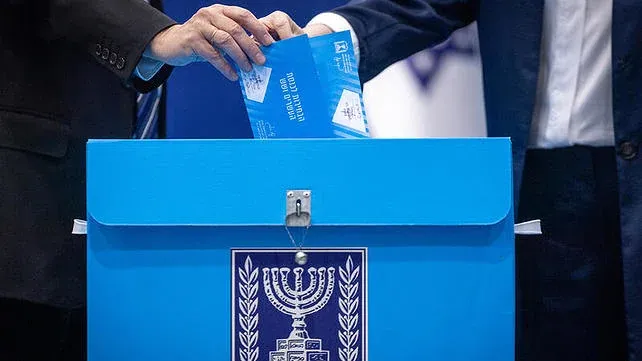
The recent electoral outcomes have highlighted a deep-seated crisis of political legitimacy. While Netanyahu's bloc secured 53 seats, a mathematical majority of 67 seats exists among the opposition and Arab-led parties. However, the inability to translate these numbers into a functioning government reveals a breakdown in the traditional mechanics of coalition building.
The opposition's structural contradictions
The opposition faces a fundamental dilemma: it possesses the numbers to lead but lacks the ideological cohesion to govern. The coalition required to replace the current administration would necessitate an alliance between secular liberals, national conservatives, and Arab political representatives. These groups often hold diametrically opposed visions for the state, making a sustainable alternative government difficult to realize.
The role of Arab political parties
The increasing influence of Arab citizens within the Knesset presents a critical democratic test. While these parties are elected representatives of a significant portion of the population, their role in national decision-making remains a point of intense contention. The refusal of some political sectors to recognize Arab parties as legitimate partners creates a contradiction within Israel's claim to be a functioning democratic society.
Social cohesion and the crisis of shared responsibility
Beyond the halls of the Knesset, Israel is grappling with internal fractures regarding the distribution of national duties. Central to this is the ongoing debate over military conscription and the legal status of the Ultra-Orthodox community.
The perception of unequal obligations—where certain sectors are exempt from the burdens of national defense and civil service—threatens the principle of equality before the law. This imbalance erodes social cohesion and creates a sense of grievance among the secular and national-religious populations who bear the primary weight of national service. The political cost of maintaining the current status quo is rising as the demand for shared responsibility intensifies.
Institutional integrity and the battle over democracy
A primary driver of the current unrest is the struggle over the independence of state institutions, most notably the judiciary. The conflict is not merely about legal reform but represents a deeper battle over the balance of power between the executive and the courts.
Proponents of reform argue for greater democratic accountability, while critics view the movement as an attempt to centralize political control over the mechanisms that check government power. The long-term consequences for Israeli democracy depend on whether the state can establish a framework that ensures both institutional effectiveness and the protection of independent oversight.
Accountability following the October 7 failures
The security failures of October 7 remain an unresolved wound in the Israeli psyche and a central pillar of the political crisis. There is a significant lack of consensus regarding a framework for investigating these failures and establishing formal accountability.
The tension here is twofold: the need for a transparent truth-seeking process to prevent future catastrophes, and the political reality that such an investigation could destabilize those currently holding power. Without a broadly accepted mechanism for accountability, the crisis of public trust in national security institutions is likely to persist.
Strategic implications and international standing
Israel's domestic instability is not contained within its borders; it directly impacts its international diplomatic position. The internal political struggle complicates Israel's relationships with key allies, including the United States and European nations.
As domestic policy becomes increasingly polarized, the ability of the Israeli government to present a unified strategic front on regional security and the Palestinian issue is diminished. This perceived internal volatility can lead to strategic isolation, making it more difficult for Israel to navigate complex geopolitical shifts and maintain its regional standing.
Potential scenarios for Israel's future
The nation currently stands before three primary paths, each carrying significant risks and potential outcomes:
An opposition-led government: This would likely rely on the support of Arab parties, potentially triggering further domestic polarization and challenges to the government's perceived legitimacy.
A national unity government: While providing temporary stability, such a coalition would involve rivals with incompatible agendas, likely leading to legislative paralysis.
Repeated election cycles: A cycle of continuous campaigning would prolong the current deadlock, further deepening public distrust and institutional decay.
Frequently asked questions about the Israeli political crisis
Why is it difficult to form a new government in Israel?
Despite the opposition holding a potential majority, the ideological differences between secular, conservative, and Arab political groups make it nearly impossible to build a stable, long-term coalition that can govern effectively without constant deadlock.
How does the October 7 event affect current politics?
The security failures of October 7 have created a massive demand for political accountability. The struggle to implement an investigation without destabilizing the current leadership is a major source of public distrust and political tension.
What is the impact of the Ultra-Orthodox exemption on society?
The exemption from military service for the Ultra-Orthodox community creates a sense of inequality regarding national responsibilities. This tension threatens social cohesion and challenges the democratic principle of equality before the law.